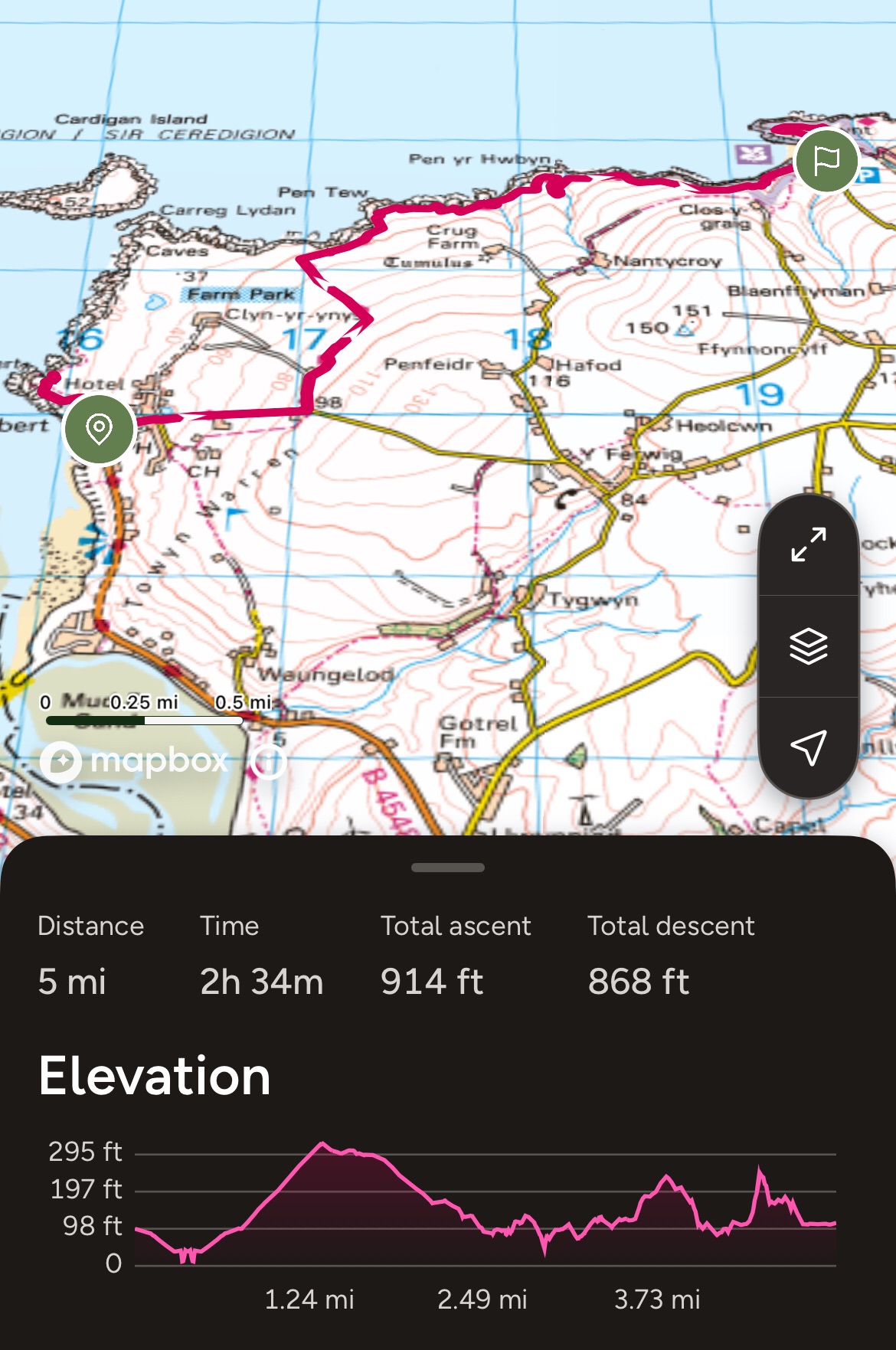
This walk starts directly outside the Gwbert Hotel where the Wales Coast Path runs alongside the roadway. Before joining the coast path we first took a detour on a public footpath which runs through the grounds of The Cliff Hotel nearby, leading to a viewpoint known as Craig y Gwbert.
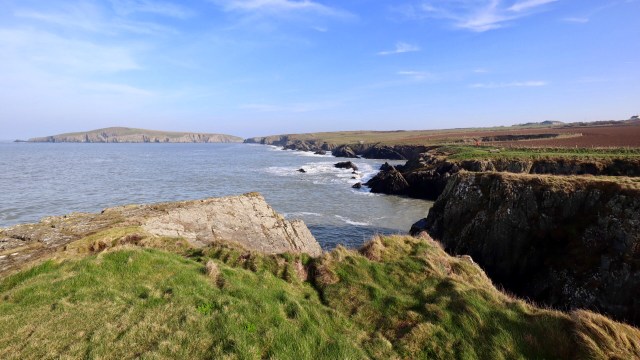
This beautiful spot is renowned for offering great views of the rugged coastline towards Cardigan Island and is definitely worth taking time to include this as part of a coastal walk through this area.
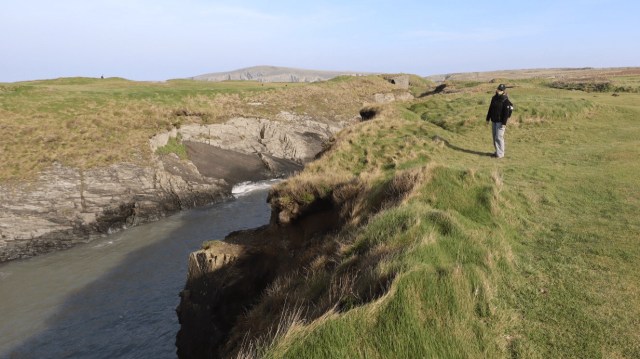
Cliff top walk above a narrow cove
From this vantage point you have a good view of whirlpools and waves crashing around rocky outcrops. Nearby is a narrow cove and walking along the clifftop you hear the sound of the forceful ebb and flow of waves, amplified by the narrow steep cliff walls.
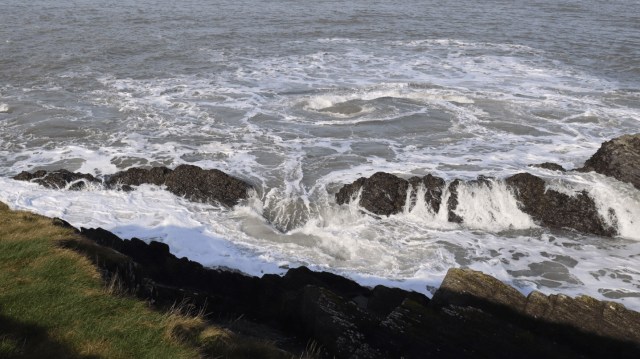
Waves and whirlpools
Retracing our steps to the road at Gwbert we rejoin the Wales Coast Path heading uphill along a country road, passing the entrance to Cardigan Island Farm Park. Unfortunately due to a long standing dispute, the farm park owners prohibit walkers from access to their land, which includes a long stretch of fine coastline. This is a real shame and is the reason the official WCP route is forced inland around fields bordering the farm park.
As we walked across the fields there’s a fine view, albeit at some distance, of Cardigan Island. The island is a nationally important wildlife habitat and protected nature reserve.

Distant views of Cardigan Island
The path takes a welcome turn towards the coastline and soon winds along grassy cliff tops with views of the open sea. There are a few descents and climbs through some picturesque hidden valleys.
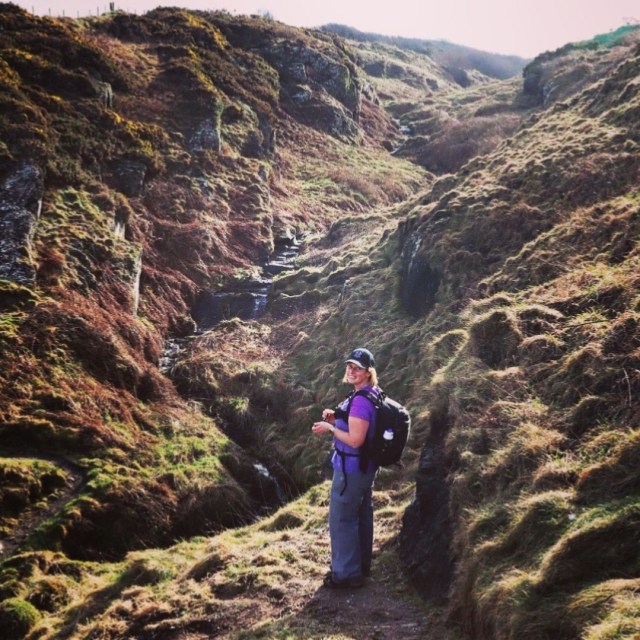
Scenic hidden valley
Walking through these small valleys, crossing stepping stones and footbridges over streams tumbling to the sea provides an opportunity to just pause and take a moment in such a tranquil landscape.
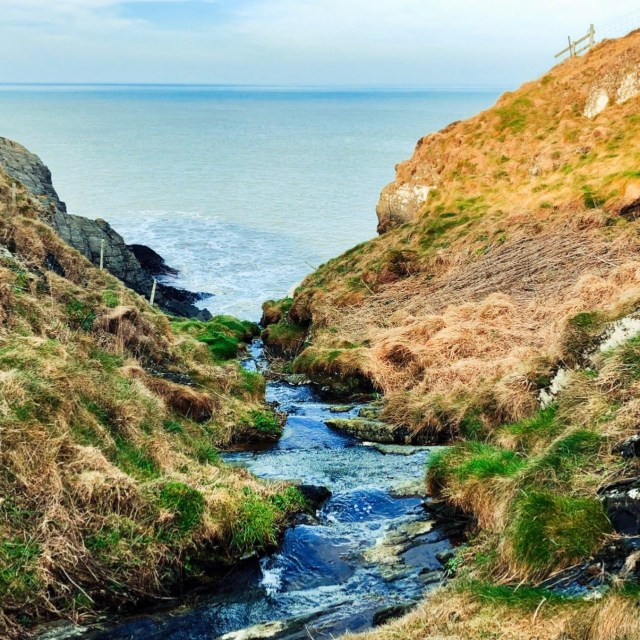
A tumbling stream
Moments like this can really make a walk all the more enjoyable, just to have a short break and breathe deeply, listen to the gently flowing water, to feel the breeze and the sun on your face. To be immersed in nature really is a balm for the soul.
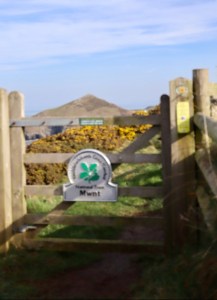
In the distance coming into view is the impressive sight of the prominent headland at Mwnt. From the coast path, when viewed directly ahead the hill has a pyramid like profile. On the approach to Mwnt you enter the National Trust managed area which includes Mwnt beach and the hill.
The approach to Mwnt is easy going and is a pleasant walk across the top of gently rolling hills with masses of gorse bursting with blooms of vibrant yellow flowers and the distinctive coconut like scent hanging in the air.
Looking ahead there are fine views of ‘Foel-y-Mwnt’ , the impressive headland hill standing protectively above an idyllic sheltered cove and sandy beach.

Mwnt Beach and Foel-Y-Mwnt
Mwnt is an idyllic sheltered sandy beach backed by high sided cliffs. The beach is reached by a set of stone steps which run alongside a freshwater stream flowing down to the beach. And what a beautiful beach it is, lauded as one of the finest in Wales and deservedly so.
The beach is sheltered by the prominent hill of Foel-Y-Mwnt but surprisingly the coast path doesn’t include the paths which climb the hill to the summit.
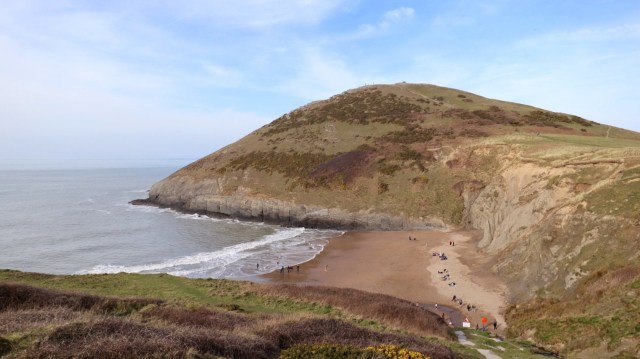
But take the short detour from the WCP as it’s definitely worthwhile to include the hill climb and an exhilarating walk up to the summit.
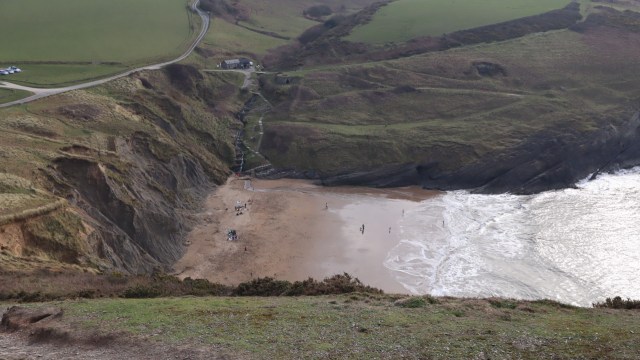
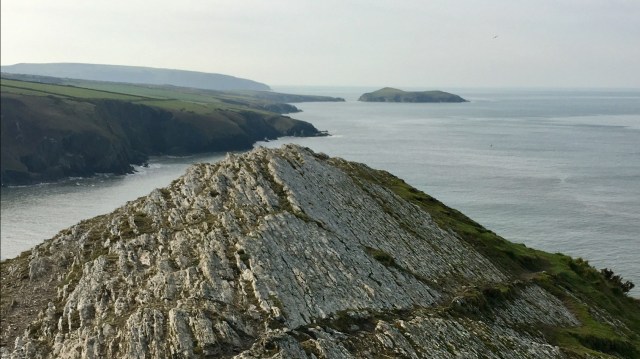
The path up is an uneven rocky and stone surface but on reaching the rugged rock summit you’re rewarded with exceptional views in all directions.
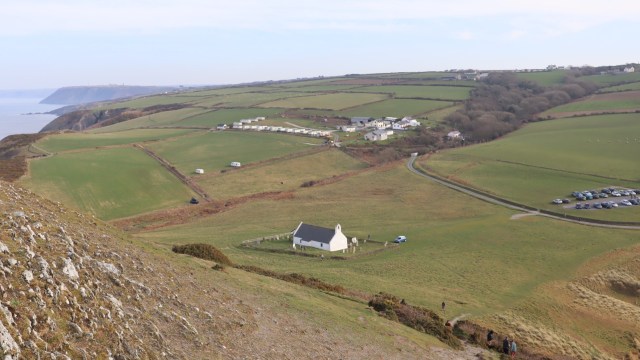
At the top of the hill is a stony outcrop, so find a spot to make yourself comfortable and enjoy the views of the local countryside and across Cardigan bay.
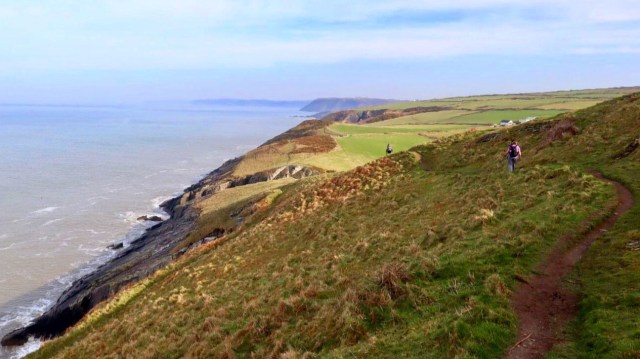
We followed a path back down around the North-west side of the hill, a narrow track with more stunning views of the coast and countryside stretching ahead to the North.
The track meanders down the hill and we walked across fields to the iconic landmark of the Church of The Holy Cross.
Holy Cross Church, Mwnt

This ancient holy site was once on an Old Pilgrims Way route to St. David’s Cathedral in Pembrokeshire. The simple, whitewashed church dates to the 14th Century and served throughout the Middle Ages as a refuge for pilgrims to rest on their journey. In times past, for Christian pilgrims it was deemed that completing 2 pilgrimages to St. David’s equalled one to Rome.
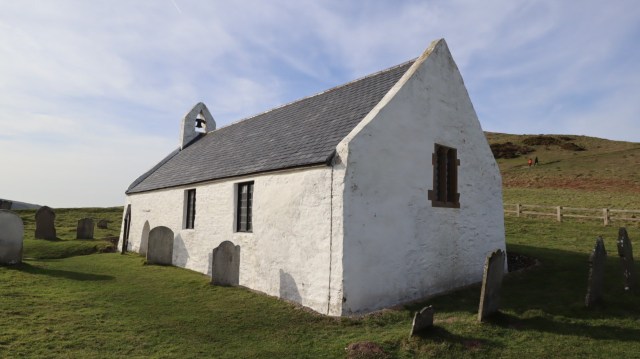
Walking around the churchyard was like stepping back in time as the church retains an air of beautiful antiquity in this isolated setting.
The link to pilgrims of the Middle Ages brought to mind a marvellous quotation from John Muir, the American naturalist. Referring to the origins of the phrase to “saunter” which was his preferred description of walking in mountains but which could equally apply to coast walking…..

After visiting the Church and being inspired by its wonderful setting, we “sauntered” on our way, retracing our steps to return along the coast path to Gwbert.
Route Recap
This walk including the initial detour to the viewpoint at Gwbert and the Foel-y-Mwnt hill climb, was 5 miles ‘point to point’. We returned to Gwbert via the same Wales Coast Path route, 3.5 miles so the total walk distance is 8.5 miles ‘out and back’.
 Short Walks Long Paths
Amazing coastal walk and such lovely photos, the description made us feel as if we were on the walk, look forward to the next adventure.
LikeLiked by 1 person
A lovely part of the country as well illustrated by your photos.
The hidden valleys and streams are really interesting – begging to be explored.
Cato
LikeLiked by 1 person
Stunning landscape Rich. Thanks for the follow too 😀
LikeLiked by 1 person
Did that walk in March, the scenary is absolutely stunning, beatiful part of the coast path. it was definately worth the effort.
LikeLiked by 1 person
I would love to visit this scenic coastline.
LikeLiked by 1 person